
    |
| LANGUAGE SELECT |
 |
Main Menu |
|
 |
|
 |
|
 |
|
 |
|
 |
|
 |
|
 |
|
 |
|
 |
|
 |
|
Quick Links |
|
 |
|
 |
|
 |
|
 |
|
 |
|
 |
|
 |
|
 |
|
 |
|
Seasons |
|
 |
|
 |
|
 |
|
 |
|
Supporters |
|
 |
|
 |
|
 |
|
Yubetsu Town 上湧別町 |
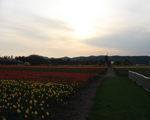
From early May to early June, Kamiyubetsu takes centre stage as the most popular day-trip destination following the long Hokkaido winter, with local and international tourists descending on the town in large numbers to enjoy over 120 varieties of tulips, with more than 120,000 tulips in total. The best way to get there from Asahikawa is by rental car, giving you the freedom to time your own itinerary, while at the same time ample opportunity to take in the spectacular spring scenery along the way. If a rental car is not your thing, private tours and bus tours are available to take you to all three locations, these will vary in price and are often subject to minimum numbers. For more information on tours contact us at: May to June tends to provide mild temperatures and little rain, and you will be unlucky to come across poor weather along the way, but be sure to have a warm jacket with you just in case. |
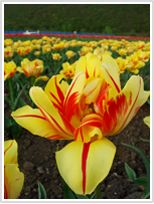 Kamiyubetsu is located north of Asahikawa just short of the Okhotsk coast line and is home to one of the most popular flower festivals on the Hokkaido flower calendar.
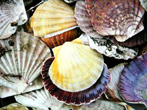
Scallops and Spring Water Noodle Saroma lake, located on the coast side of Kamiyubetsu town, is highly regarded for its delicious scallops. The freshest scallops are considerably different in smell, texture and most importantly taste, and you will quickly notice the difference once you sample a fresh batch. |

|
 |
The Origin of the name "Kamiyubetsu"
The name"yubetsu" originated from the Ainu word "yube" meaning shark. Later Yubetsu village was divided into several areas, and "kami" was added given the town was the most upstream of the Yubetsu River, "kami" meaning "upper". |
Cultural Center TOM
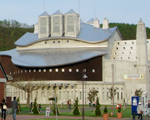
TOM is a cartoon museum exhibiting local, national, and international cartoonists work. The "100th anniversary statue", built next to TOM is unique architecturally as it forms the shape of a heart when observed from above. |
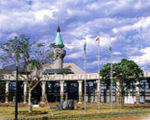
Town Museum JRY |
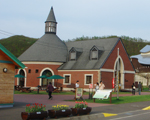
Brick Town - Kamiyubetsu |
 |
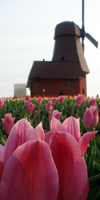
The picture above was taken at just before closing time at the park. From our experience, the park is best enjoyed with the sun a little higher in the sky.
If you are planning to take in Takinoue Shibazakura Park, Monbetsu and Kamiyubetsu in one, you will do well to arrive at Kamiyubetsu before 4pm to get the most out of it. |

 2:30 Free Parking
 Yes
Yes No
No  flat gravel paths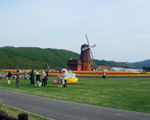
Yubetsu Town Official Information 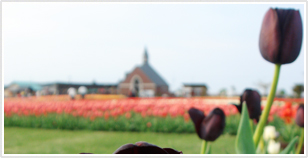 Yubetsu Town Official website (in Japanese) Yubetsu Tourism Association Map |
SIGHTSEEING |
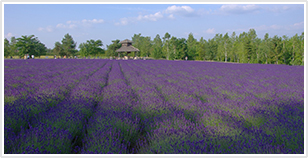 Tomita Lavender Farm 富田ファーム As far as day trip ideas from Asahikawa go, Tomita Farm is a great choice. A 10ha lavender paradise, Tomita Farm provides ample opportunity for relaxed walks surrounded by a seemingly endless patchwork of color.  More Information More Information |
FEATURED HOTEL |
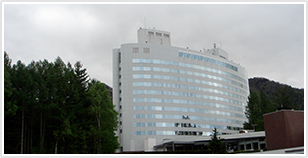 New Furano Prince Hotel The New Furano Prince Hotel offers unsurpassed convenience for both winter and summer visitors to Furano. It's proximity to the Furano Ski Area, a host of spectacular dining options, and senesational hot- spring facilities all conspire to make the New Furano Prince Hotel the number one choice for Furano accommodation. Check Rates, availability, and special offers |
SIGHTSEEING |
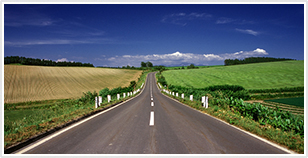 Biei Town - 美瑛町 Biei is like a page from a picture book, capturing spreading rolling hills and an almost complete panoramic view of the Taisetsu mountain range. You can enjoy Biei throughout the year, with the snow-capped tips of the Taisetsuzan contrasting the bare soil in spring, beautiful flowers and blue sky in the summer, autumn leaves and bright yellow rape blossoms in fall, and pure white powder snow in winter. More Information |
FEATURED BAR |
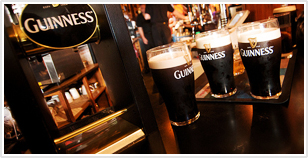 The Den International Bar The Den International Bar should definitely be the first choice for international visitors looking to sit back in comfort and reminisce about their day's activities over a few drinks. With a solid food line- up and great foreign beer selection, the Den is a great place to simply pull-up a stool, have a beer, watch some sport, and compare notes with fellow travelers about ski conditions and sightseeing locations. If you're here for more than just a few days, The Den is a must! More Information |

 Gokazan Park Campsite
 Need transit